


Nederlands Fotomuseum shows Li Yi-Fan’s acclaimed installation as the first venue after the Venice Biennale
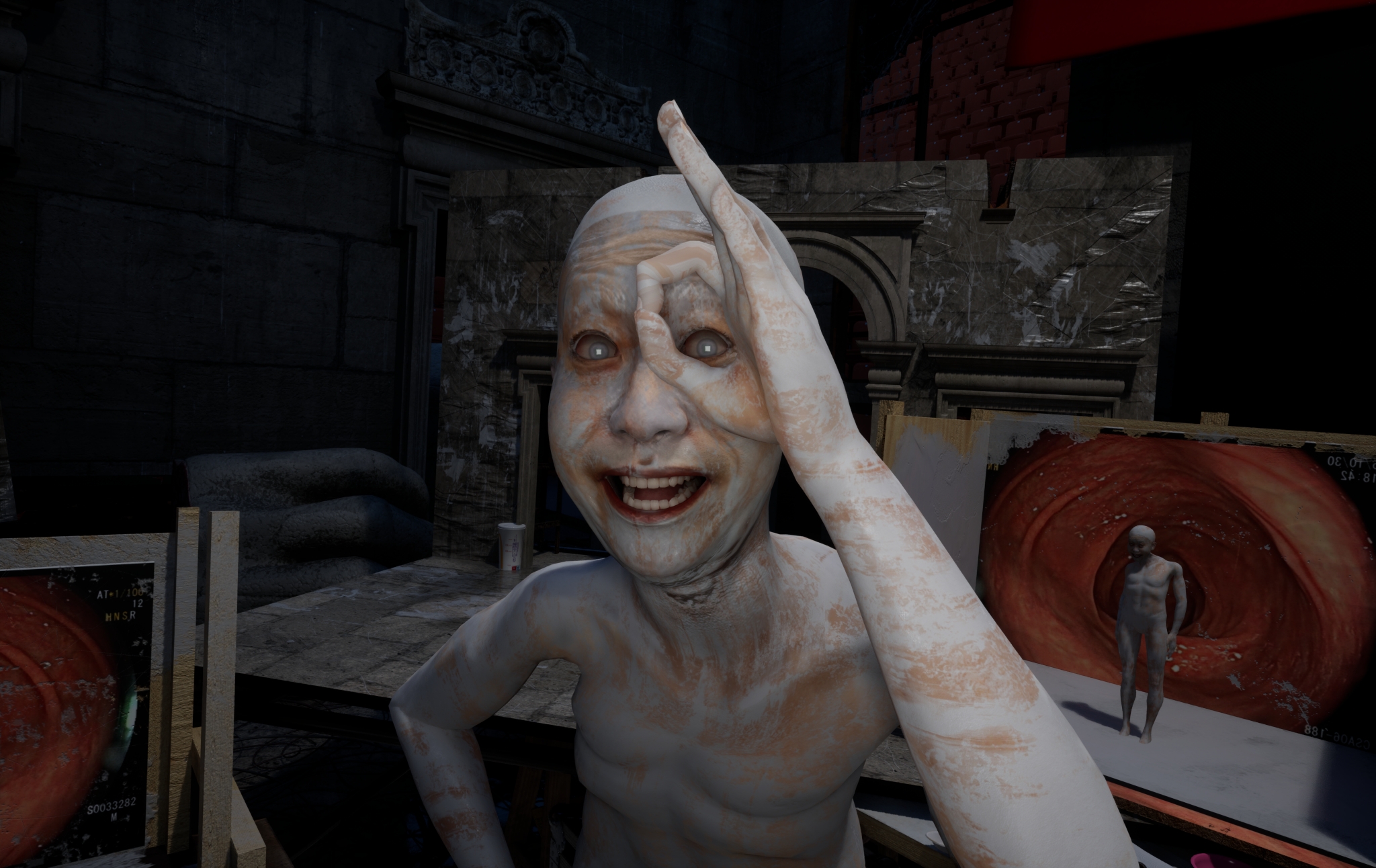
The Nederlands Fotomuseum presents, as the first venue after the Venice Biennale, Li Yi-Fan’s celebrated installation Screen Melancholy from the Taiwan pavilion. The new work takes visitors on a sharp, artistic exploration of the construction of images themselves: from the origins of concepts such as models, masks, keyframes and noise to the power dynamics behind today’s AI-generated imagery. The installation can be seen at the museum from 22 January through 11 April 2027.
From screen to sculpture
Li Yi-Fan (Taipei, 1989), from 2024 until 2026 artist-in-residence at the Rijksakademie in Amsterdam, has developed a distinctive practice over the past decade, characterized by playful tension and a sense of strange unease. Screen Melancholy marks an impressive new step in his work.
In the installation, a vaguely familiar figure–a virtual puppet–leads the visitor into the inside of the screen, and with it, behind the image. On a large LED screen, this digital figure, acting as a kind of filmmaker, directs an hour-long performance of speaking organs and digital actors that it controls like marionettes. The action unfolds within a digitally reconstructed version of the exhibition space in Venice, placing visitors within the image on multiple levels at once within the image itself, but also within this much-debated international stage for art: both viewer and extra in an image-within-an-image that keeps repeating itself.
This overtly digital work thus leans, at the same time, toward the analogue and the theatrical. The monumental exhibition space also houses large 3D-printed sculptures, modelled on parts of the artist’s own body: monumental hands, feet, and sections of legs and arms invite visitors to take an intimate seat on these enlarged body parts within the industrial museum building.
Ultimately, a human body sits on an imitation of itself, watching a performance by digital puppets that likewise mimic its form; the boundaries between ‘real’ and ‘virtual’ blur, and the repetition continues on. What, then, is still the difference between human and image?
Nederlands Fotomuseum in the world today
With the exhibition by Li Yi-Fan, the museum signals an updated direction: a more international programme that places photography and images at the centre of art, technology, media and society. Dutch photography is considered part of a global, contemporary reality in which the boundaries between disciplines, regions and identities are fluid and open to multiple perspectives. Following its premiere in May 2026 at the Palazzo delle Prigioni in Venice, the Nederlands Fotomuseum in Rotterdam is the first venue to present the installation in its entirety. It also marks the museum’s first international collaboration in some time.
Over the coming years, the Nederlands Fotomuseum will carefully develop and strengthen its role as a centre of expertise, drawing on its collection of 6.5 million objects and its unique research capabilities. This work will be organically connected with exhibitions developed collaboratively by the museum’s own team, alongside more in-depth content on photographic history and theory within the permanent displays. The Nederlands Fotomuseum is developing a dynamic, interdisciplinary programme that brings critical perspectives on the past into dialogue with contemporary developments.
Screen Melancholy is on view at the Nederlands Fotomuseum in Rotterdam from 22 January to 11 April 2027.


Archives of the Rijksmuseum and Nederlands Fotomuseum form the basis for ‘Ed van der Elsken. Up Close’
Until 13 September 2026, the Rijksmuseum in Amsterdam presents Ed van der Elsken. Up Close, an exhibition about the work and creative process of one of the most important Dutch photographers of the twentieth century. The exhibition is the result of years of research into Ed van der Elsken’s personal archive of work, which has been jointly managed by the Rijksmuseum and the Nederlands Fotomuseum since 2019.
Ed van der Elsken (1925–1990) photographed in the Netherlands, Paris, South Africa, Sierra Leone, Japan, Hong Kong, Mexico, the United States and Indonesia. His work is direct, personal and often strikingly intimate. Van der Elsken turned his camera towards people, streets and encounters. He showed everyday life as it unfolded: lively, raw and sometimes uncomfortably close.
Jointly caring for an important photographic archive
In 2019, the Rijksmuseum and the Nederlands Fotomuseum jointly acquired the estate of Ed van der Elsken. This ensured that the photographer’s personal working archive remained preserved in the Netherlands. Since then, the museums have worked together on the management and research of this material, so that it can be better preserved, studied and shared.
The Nederlands Fotomuseum already managed Van der Elsken’s complete archive of negatives and slides. Since 2019, this has been supplemented with materials including contact sheets and photographs. The Rijksmuseum incorporated a large number of prints into its collection. Together, these materials show the artistic choices made by Van der Elsken, and how he worked and developed as a photographer and filmmaker.
How Van der Elsken worked
Ed van der Elsken. Up Close shows not only well-known photographs, but also material that is usually less visible. The exhibition includes contact sheets, notes, trial versions of photobooks and experiments from the darkroom. Photographs from the collection of the Nederlands Fotomuseum are also shown, alongside works from collections including the Rijksmuseum, the Stedelijk Museum Amsterdam and Leiden University Libraries.
It is precisely this material that brings Van der Elsken’s working method closer. Contact sheets reveal which images he made, which photographs he selected and which he left out. In his trial versions of photobooks, you can see how he placed photographs next to each other, enlarged them, reduced them and moved them around. This makes visible how much work lies behind his well-known photographs and books.
Research for the future
By looking at the archive as a whole, researchers and visitors gain a deeper understanding of Van der Elsken’s work. It also becomes clearer how his photographs, books and films came into being over the years.
For the Nederlands Fotomuseum, this collaboration connects to one of the museum’s key tasks: preserving, researching and sharing Dutch photographic heritage with a broad audience. By managing and studying Ed van der Elsken’s archive together with the Rijksmuseum, his photographs, contact sheets and other archival materials remain accessible to the public, researchers and future generations.
Made possible by
The collection was largely donated by Anneke Hilhorst, the widow of Ed van der Elsken, and partly acquired with the support of the Mondriaan Fund, the Rembrandt Association, thanks in part to its Photography and Video Theme Fund and its Dura Art Fund, participants of the VriendenLoterij, the Paul Huf Fund/Rijksmuseum Fund and the Marque Joosten and Eduard Planting Fund/Rijksmuseum Fund.
Ed van der Elsken. Up Close is on view at the Rijksmuseum in Amsterdam until 13 September 2026.