

Burgy Bouwbedrijf recognised for their restoration work
The Nederlands Fotomuseum, National Museum of Photography, isn’t the only place to experience the excellent restoration work of Burgy Bouwbedrijf. They have also worked on historic churches, department stores, offices and monuments.
Burgy worked on the Oud Amelisweerd, an 18th century estate, which received the prestigious Europa Nosta Award. This award recognizes achievements in the conservation, enhancement and adaptation to new uses of cultural heritage.
Burgy is currently working on the restoration of the Binnenhof complex, which houses the Dutch parliament. The Binnenhof is one of the oldest parliament buildings in the world still in use.

The challenge of transporting 6.5 million photographic objects
Safeguarding Dutch photographic heritage is one the main roles of the museum. At the forefront of this effort is the Moving Team. It’s their task to prepare our collection to be transported to our new home, the landmark Santos building.
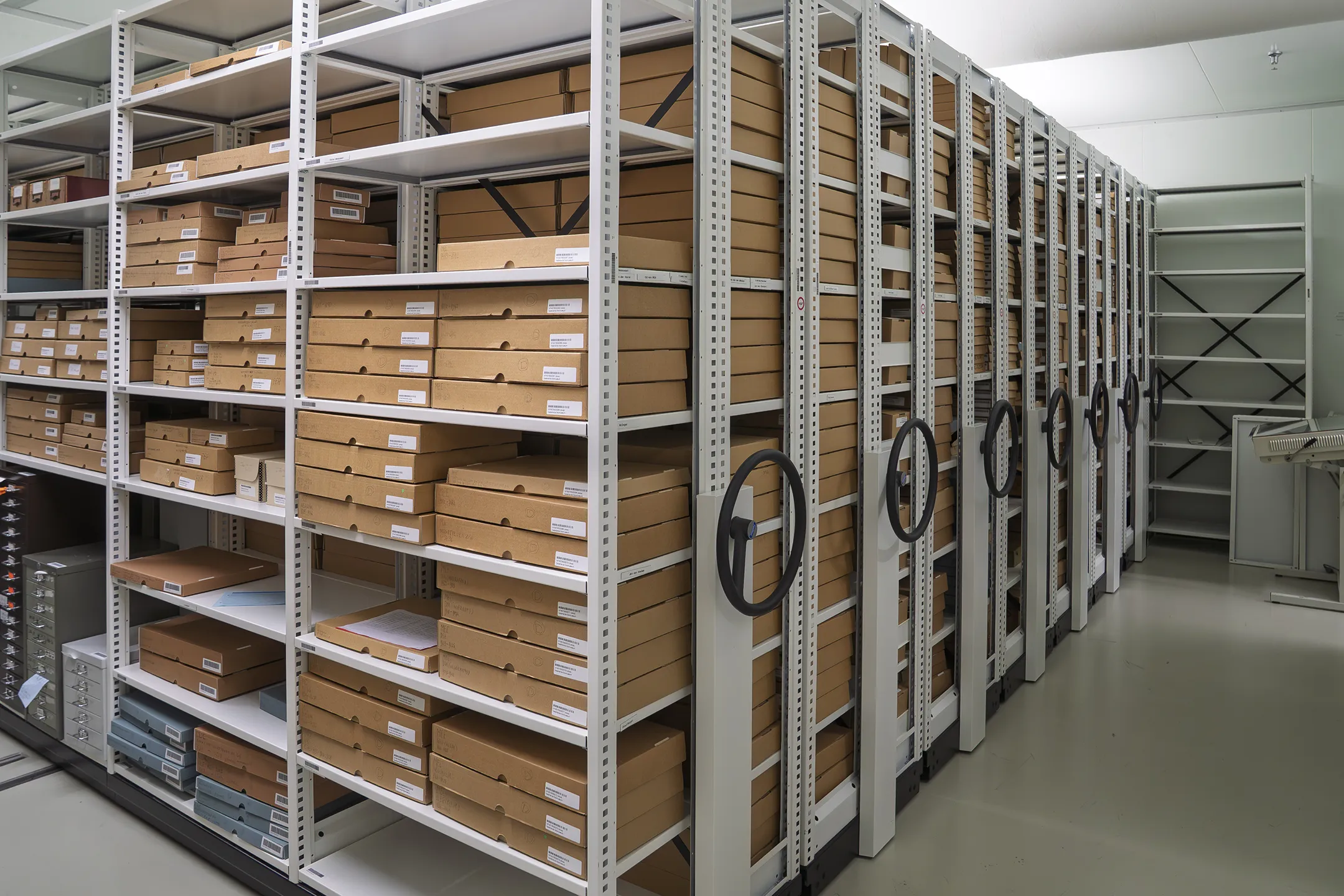
Although it’s just a 5-minute drive from our current location, the Moving Team has been preparing since December 2023. The amount of preparation work is enormous. We are working on a detailed plan for packing the thousands of archival boxes of negatives and slides.
We selected Imming Logistics, which specializes in art, to transport our collection. They helped us pack some of the larger or more awkward objects such as the framed works, big prints and cameras.
Every archival box, framed work, print and book must be packed, moved from its climate-controlled space, loaded on a truck and carefully driven to Santos. Once the truck arrives, every piece must be carefully unloaded, transported to the depot space and placed in its climate-controlled location.
Our 80,000 glass plate negatives and positives are fragile and need to be handled with care. During transport, the glass plates must be placed in the direction the truck will be driving, to avoid shocks transferring through the glass plates and putting too much pressure on each other.
Re-defining Rotterdam as a major city of culture
Thanks to a generous donation from the Droom and Daad Foundation, the Nederlands Fotomuseum, National Museum of Photography, was able to purchase and renovate the landmark Santos building.
The Droom en Daad Foundation has created a comprehensive long-term plan to invest in Rotterdam’s cultural infrastructure. Two museums will open. The Fenix Museum, an art museum about migration, opened in May 2025. Our museum will open in February 2026.
In the next decade, Rotterdam will transform itself into a new centre for European culture. The plan includes a dance house, new spaces for music making, improved public parks and a series of high-profile public art commissions.
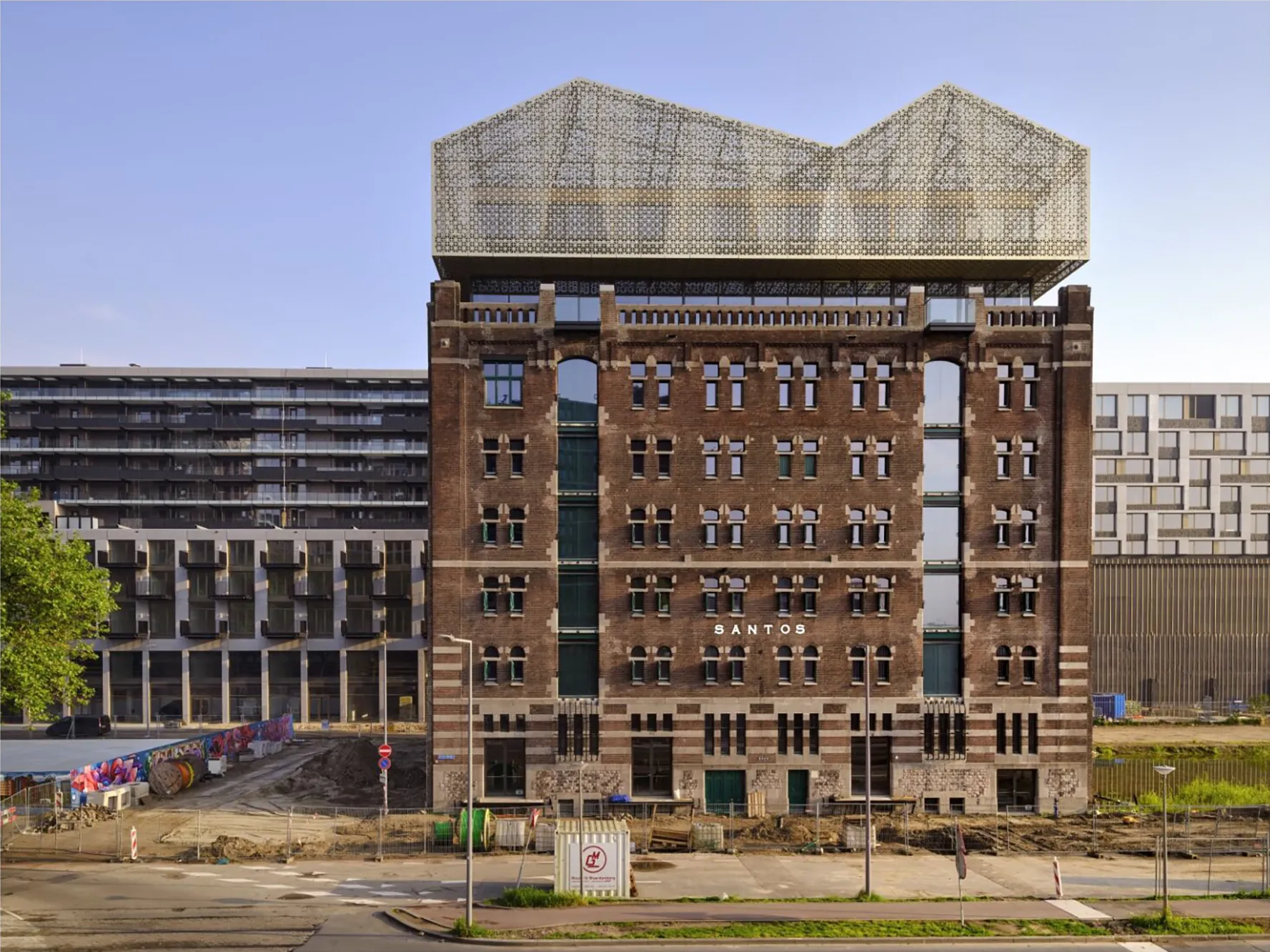
A unique addition to the Rotterdam streetscape
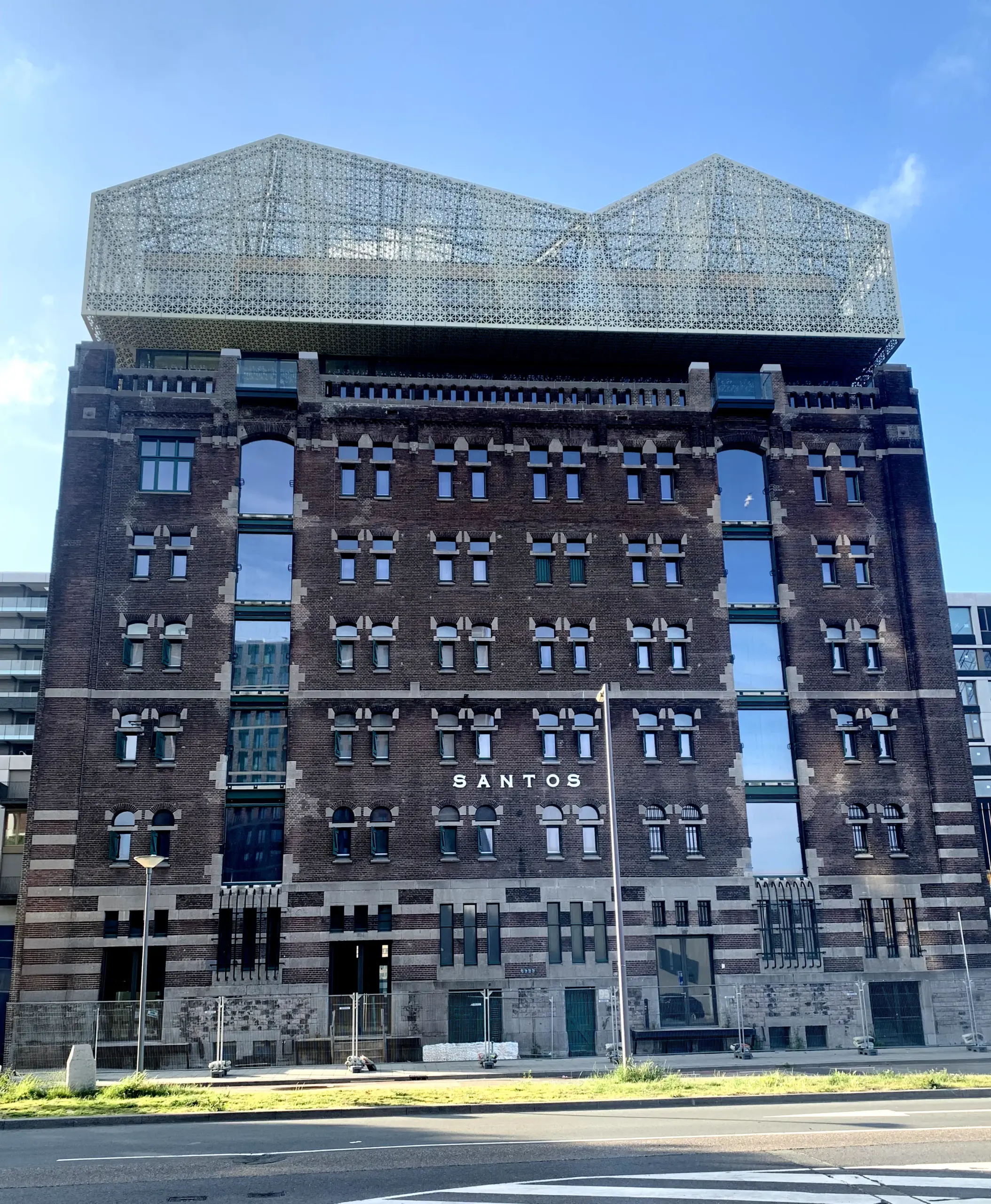
Built between 1901 – 1902, the Santos building was intended to store coffee shipped from the Brazilian Port of Santos. It is one of the best-preserved warehouses in the Netherlands, its interior is practically in original condition. For the renovation, the architects focused on restoring as much of the historic structure and fabric of the building as possible.
Wherever possible, existing external and internal elements of the original construction of the warehouse from 1901-1903 were restored. The building’s original six floors have been retained, with a cast-iron column structure, along with a large basement below the entire surface area of the building.
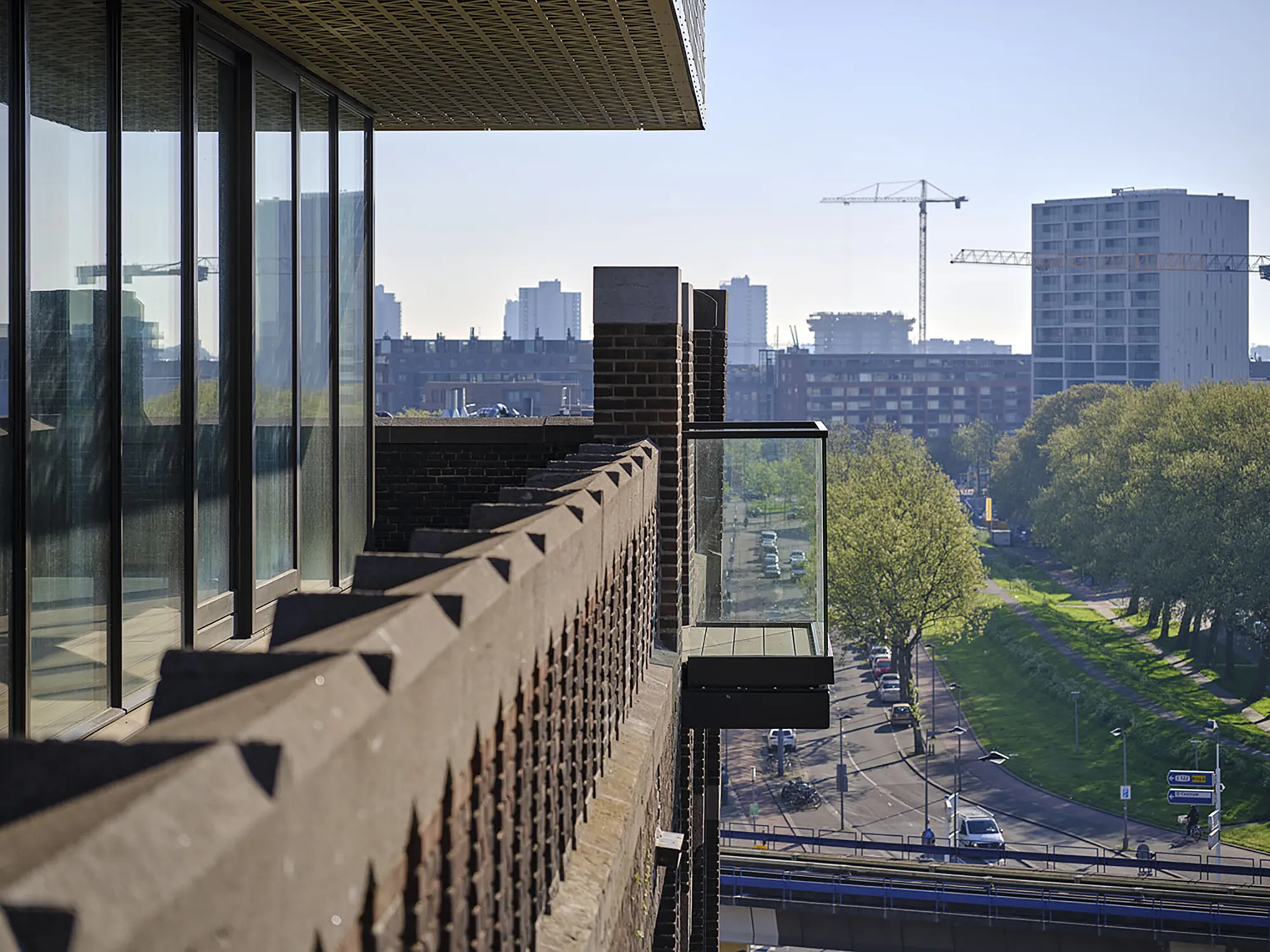
Two new floors and an atrium have been added. The centrally located atrium allows natural light to fill the entire building and connect the ground floor to the top floor with a central stairwell. The new roof is enveloped in a semi-transparent perforated aluminium ‘crown’ façade. Like Santos, our museum combines old with new.
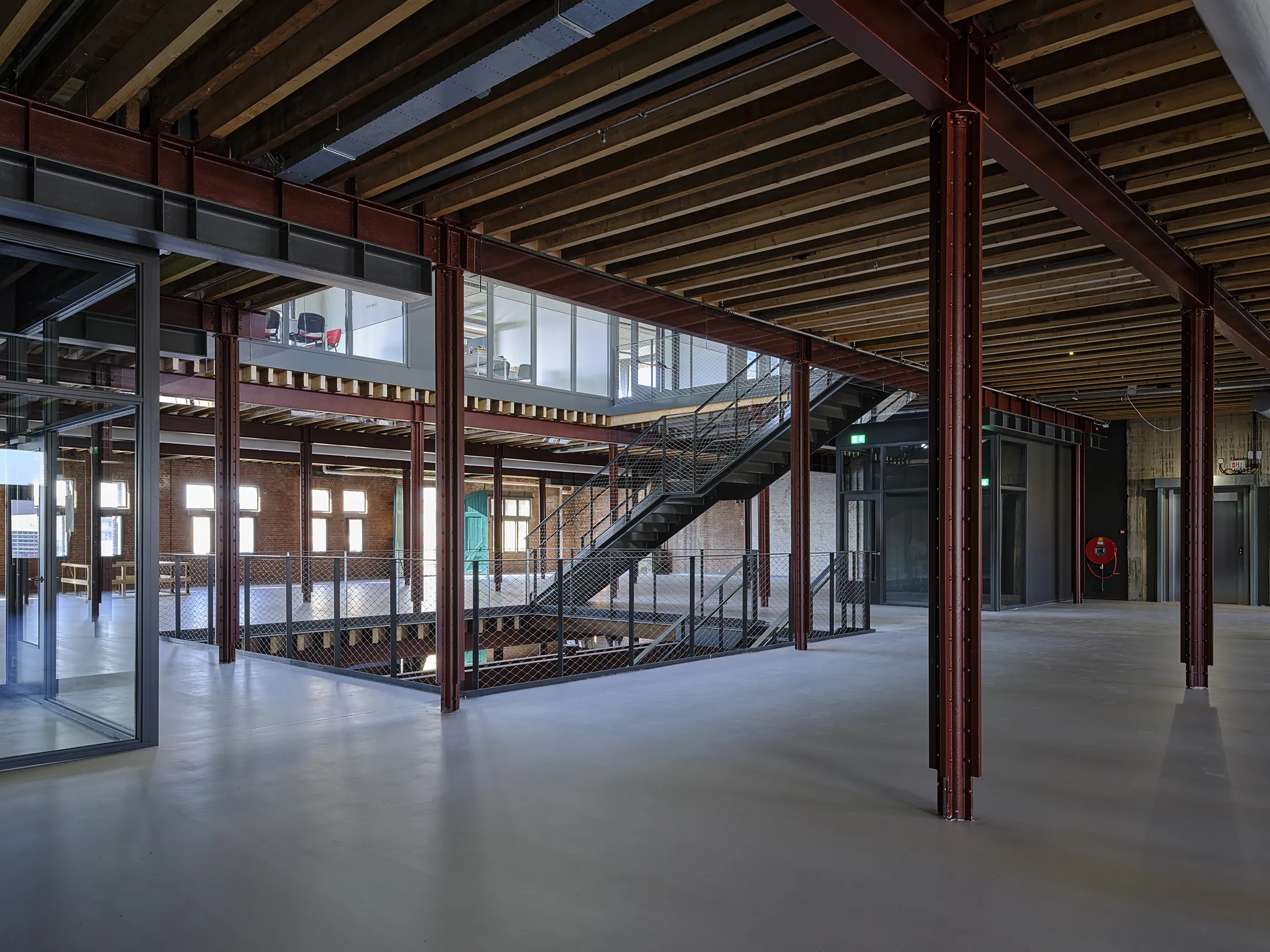
Transforming a warehouse into an inviting museum
The Santos warehouse, which was built between 1901 – 1902 was designed by the two architects Stok Wzn and J.J. Kanters. Its first use was a warehouse for coffee shipped from the Brazilian port city of Santos. The building is an excellent example of early 20th century warehouse architecture, with its richly decorated north and south facades and traditional Beaux-Arts composition.
WDJARCHITECTEN specializes in the adaptive re-use of historic structures. RENNER HAINKE WIRTH ZIRN ARCHITEKTEN is known for its modern design, planning and research activities. Their challenge: transform a dark warehouse into something inviting while safeguarding the historical integrity of the building. Our architects opted for a clear distinction between the historic structure and the contemporary extension.
The historic structure was expanded by two levels with a striking roof landscape that appears to float above the historic building like a golden crown. A new central atrium connects the ground floor to the top floor allowing natural light to fill the entire building. This makes the building more suitable for its new function as a photography museum.
In 2000, the Santos warehouse became a national landmark. Thanks to a donation from the Droom en Daad Foundation, the museum was able to purchase the building in 2023. To transform a warehouse into an inviting exhibition space, the museum worked with two architecture firms uniquely qualified for this project: WDJARCHITECTEN (Rotterdam) and RENNER HAINKE WIRTH ZIRN ARCHITEKTEN (Hamburg).
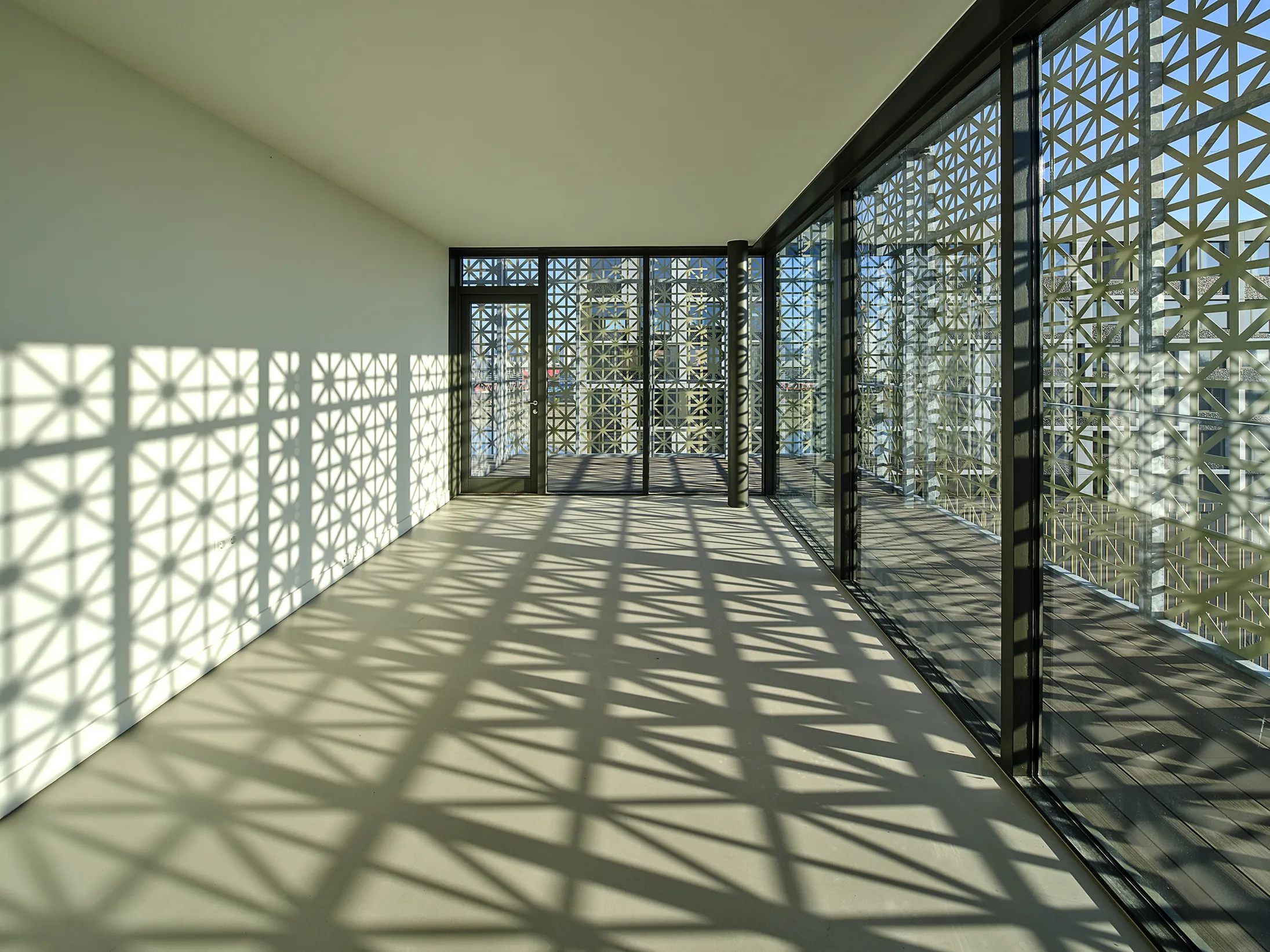
Santos to appear in Architecture Yearbook
The Santos warehouse will appear in the Architecture in the Netherlands Yearbook 2024/2025. Every year, their editors review the past year of architecture and sensational projects that reflect the state of the profession. It’s great that the Santos warehouse gets the attention it deserves.
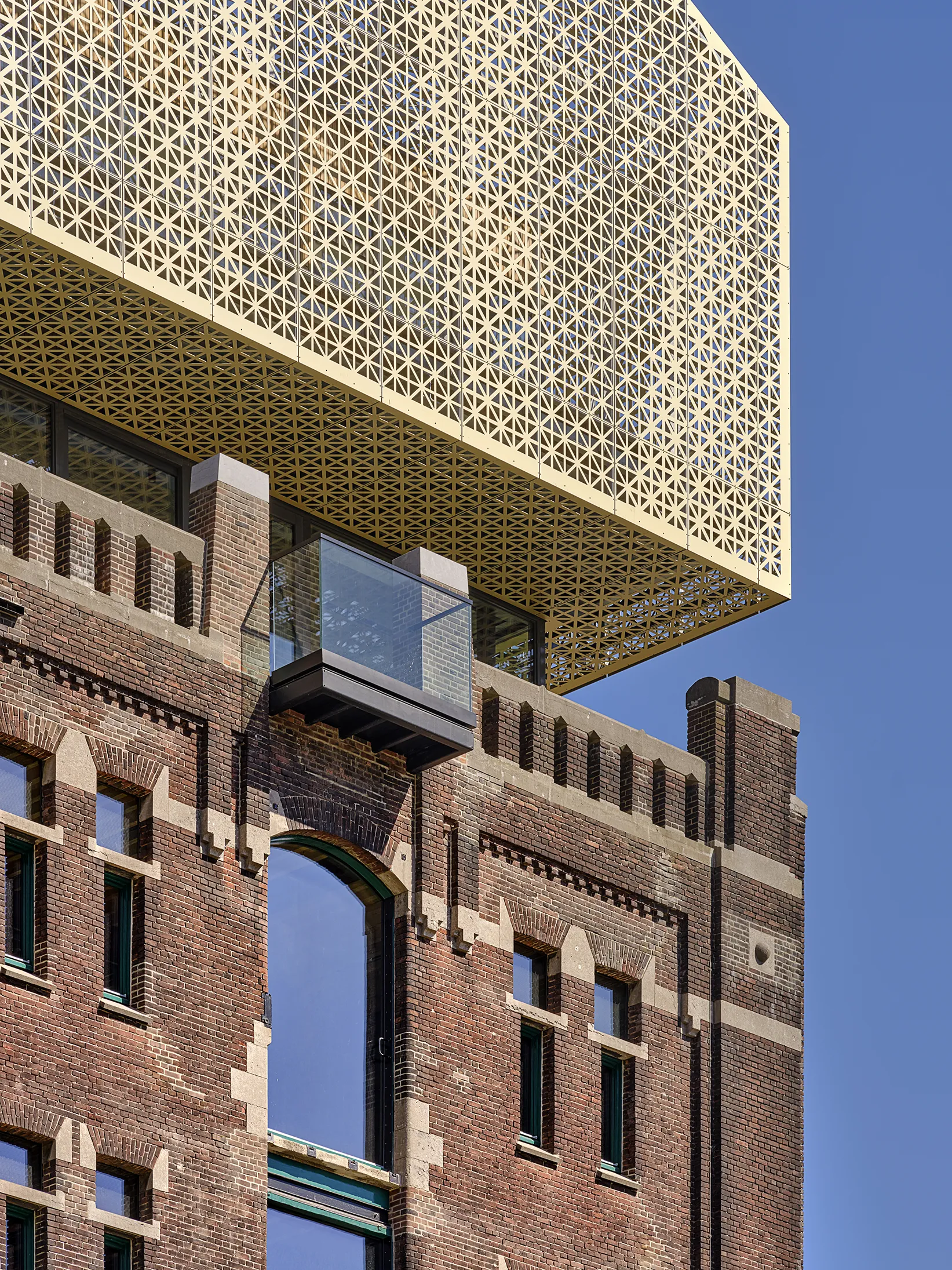
A balance between functionality, construction and architecture
Burgy Bouwbedrijf the lead construction company for the Santos warehouse, specializes in the restoration and renovation of historic monuments. This fourth-generation family run company has become one of the leading restoration companies in the Netherlands.
For a building over 120 years old, the Santos warehouse is in remarkably good condition. Since the building wasn't heated when it was a coffee warehouse, there was less moisture problems that can damage the wood.
Burgy believes you need to deal with buildings in a respectful, intelligent and careful manner. It’s what they call classic construction. They combine traditional craftsmanship with innovative techniques.
During the Santos restoration, their craftmanship can be seen on the frames, doors, brickwork on the facades. The crown was developed using a 3D model. They needed to make certain the building had sufficient load-bearing capacity to support the weight of aluminium crown. Since two extra floors were added, the load-bearing capacity of the building was increased. The iron columns on the fourth and fifth floors were structurally reinforced. On the fifth floor, extra wooden beams were added to ensure sufficient load-bearing capacity for the new 6th and 7th floors.
Burgy worked closely with the museum, the architects and all other parties involved to ensure the perfect balance between functionality, construction and architecture.
Santos architects receive two design nominations
The museum is extremely proud of our architects: WDJARCHITECTEN of Rotterdam and RENNER HAINKE WIRTH ZIRN ARCHITEKTEN of Hamburg. Their work of the Santos warehouse has been nominated for two design awards.
The first nomination is for German Architecture Museum DAM prize, which recognizes the work of German architects in international buildings. The second nomination is for the Design Educates Awards (DEAwards), which honours projects with impressive design that make a positive contribution to society and the environment.